Legal First Aid® for California’s County Veterans Service Officers
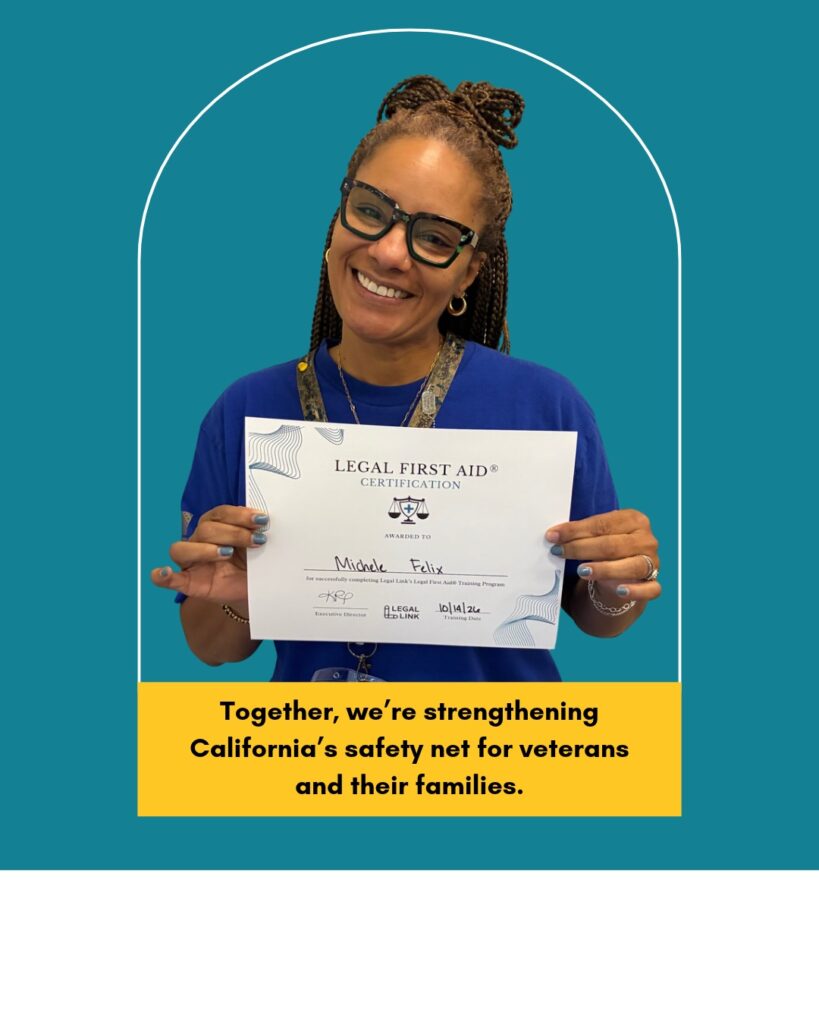
Legal First Aid® for California’s County Veterans Service Officers
Legal First Aid® for California’s County Veterans Service Officers
October 2026
Authored by John Swindle & Jenecia Martinez
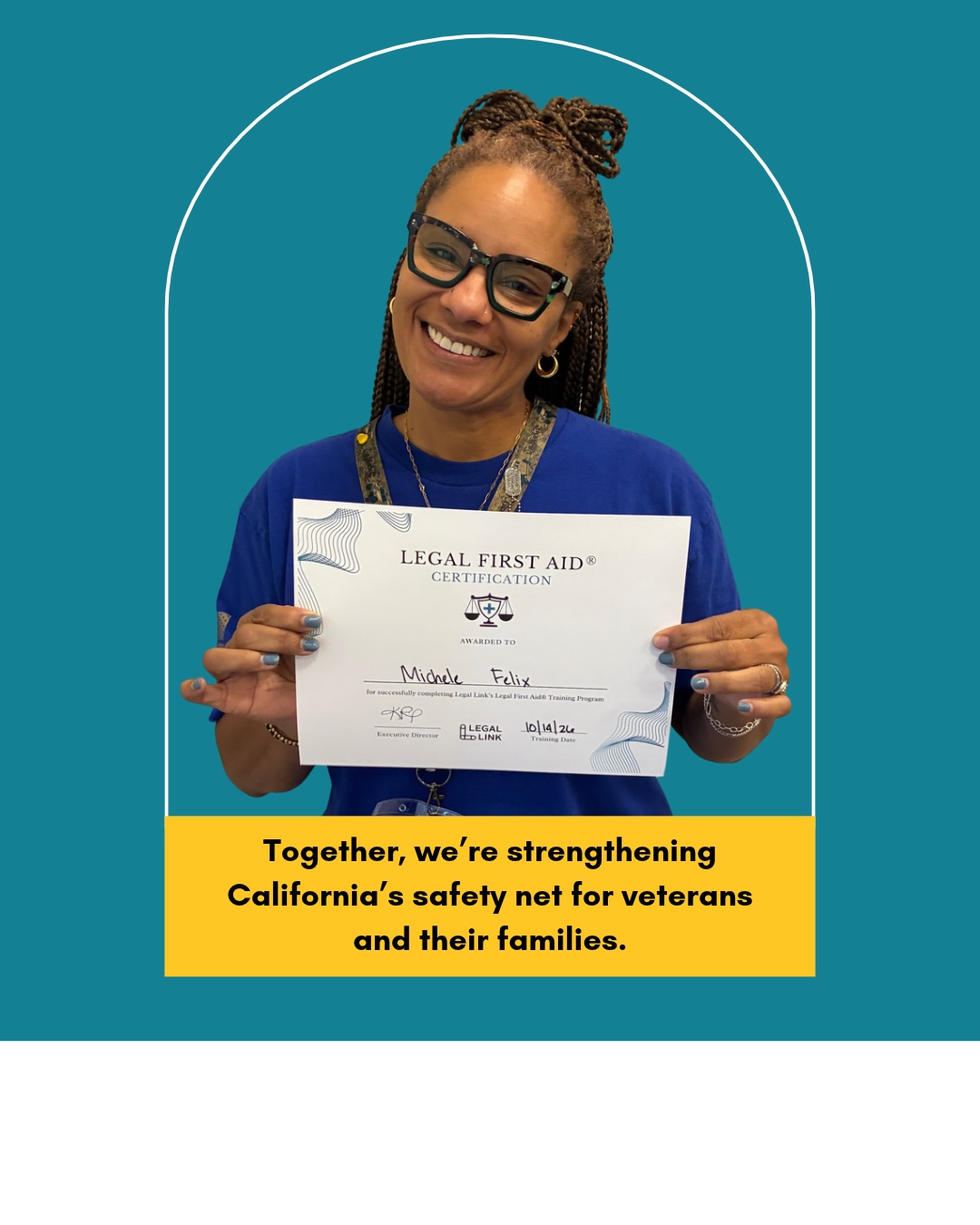
On October 14, Legal Link traveled to Riverside, California, to lead a Legal First Aid® training for members of the California Association of County Veterans Service Officers (CACVSO). Members come to this work from many paths, but all of them serve as a trusted bridge between veterans and the benefits and resources they’ve earned. While they know the VA system well, this day focused on the legal problems that sit just outside it, and knowing how to respond when one surfaces in their work with veterans.
Who Was in the Room
Sixty-five people completed the training. In the 30 days before, they served about 5,661 clients, with a median of 60 each. These trusted, community-embedded helpers often encounter veterans’ and families’ legal problems long before they reach a courthouse or legal aid office. Each interaction is an opportunity to spot a problem early, before it becomes a crisis.
Understanding the Justice Gap
We started with the justice gap: the distance between the civil legal problems people face and the legal help available to them. Most people never get the help they need. Many don’t realize their problem is a legal one at all. They think of it as a bad landlord, a confusing letter, or just a rough patch.
For veterans, that gap can be even harder to see. Someone comes in for a disability claim and mentions, almost in passing, that they’re behind on rent, a debt collector keeps calling, or a custody arrangement fell apart after they returned from deployment. The person across the desk is often the first to hear it. Because they’re embedded in their communities and trusted by the veterans and families they serve, these helpers are uniquely positioned to recognize legal needs others might miss.
That’s why we start by listening to them. Before training, we surveyed participants about the legal issues they encounter most, so the content would reflect the challenges they see in their day-to-day work. Benefits topped the list (82%), followed by housing (60%), family matters (46%), and criminal matters (43%). Many participants identified more than one area of need.
Learning to Identify Legal Issues
Much of the day was spent practicing how to recognize legal issues when they don’t announce themselves. Participants worked through how everyday concerns connect to common areas of law, including:
- Housing: eviction notices, unsafe conditions, and unpaid rent
- Consumer and debt: collections, wage garnishment, and predatory lending
- Family: custody, child support, and domestic violence
- Workers’ rights: workplace discrimination and wrongful termination
- Benefits: CalFresh, SSI, VA benefits, and discharge upgrades
- Immigration: issues affecting veterans and their family members, including removal
- Criminal re-entry: expungement and re-entry services
We also covered how to ask good questions without giving legal advice. Participants practiced gathering the key facts, spotting important deadlines, and keeping the conversation respectful and trauma-informed. Those skills matter most when someone is overwhelmed and doesn’t know what to ask for.
From Recognizing to Referring
Spotting an issue is half the work. The other half is connecting the veteran to the right help. Participants learned how to find and evaluate legal aid organizations, how to make a warm referral instead of just handing over a phone number, and how to help someone understand the legal and court documents in front of them. We emphasized staying within the role of a Legal First Aid responder, teaching participants the difference between legal advice and legal information and showing how much meaningful support non-lawyers can provide, including referring someone to an attorney when the situation calls for it.
We closed with case scenarios based on real situations participants encounter in their work with veterans. Each group worked through a scenario together, identifying every legal issue the veteran might be facing,what questions to ask, the resources and referrals they could offer and the next steps they could take to support the veteran.
What Changed in One Day
Of the 65 participants, 63 completed the exit survey, and the results show real movement. Overall legal capability improved by 93%. The average knowledge score rose from 113 to 158, about 40% higher.
Confidence grew too, especially in the situations that can make anyone feel out of their depth:
- When the other side has a lawyer and you’re on your own: 33% → 63%
- When the other side will only speak through their lawyer: 44% → 81%
- When facing an unfair judgment, knowing your right to appeal: 49% → 86%
- When you get a notice that requires completing forms or making your case: 59% → 86%
Participants rated how likely they were to recommend the training at 9.33 out of 10.
What Participants Took Away
Participants left Riverside with more than new knowledge. They left with tools they can use in their very next client meeting: a framework for spotting legal issues, and a set of questions for understanding a veteran’s full situation. They also joined a network of 4,000+ Legal First Aid® certified responders across the country, a growing community of service providers using legal empowerment tools to support their clients through legal issues.
In their own words, the training “stimulated my thinking about my role and what else I can do as a VSR,” offered “a lot of information and resources provided that can be customized to the person in need,” and “reduced the stress in knowing what resources may be available for clients.”
When the people who help veterans can recognize legal problems early, fewer of those problems escalate into crises.
This training and partnership was made possible by the generous support of the May & Stanley Smith Charitable Trust.
Legal Link is a national nonprofit dedicated to closing the justice gap through legal empowerment. Our flagship program, Legal First Aid®, trains frontline community workers and advocates to identify legal issues and connect people to the help they need.